


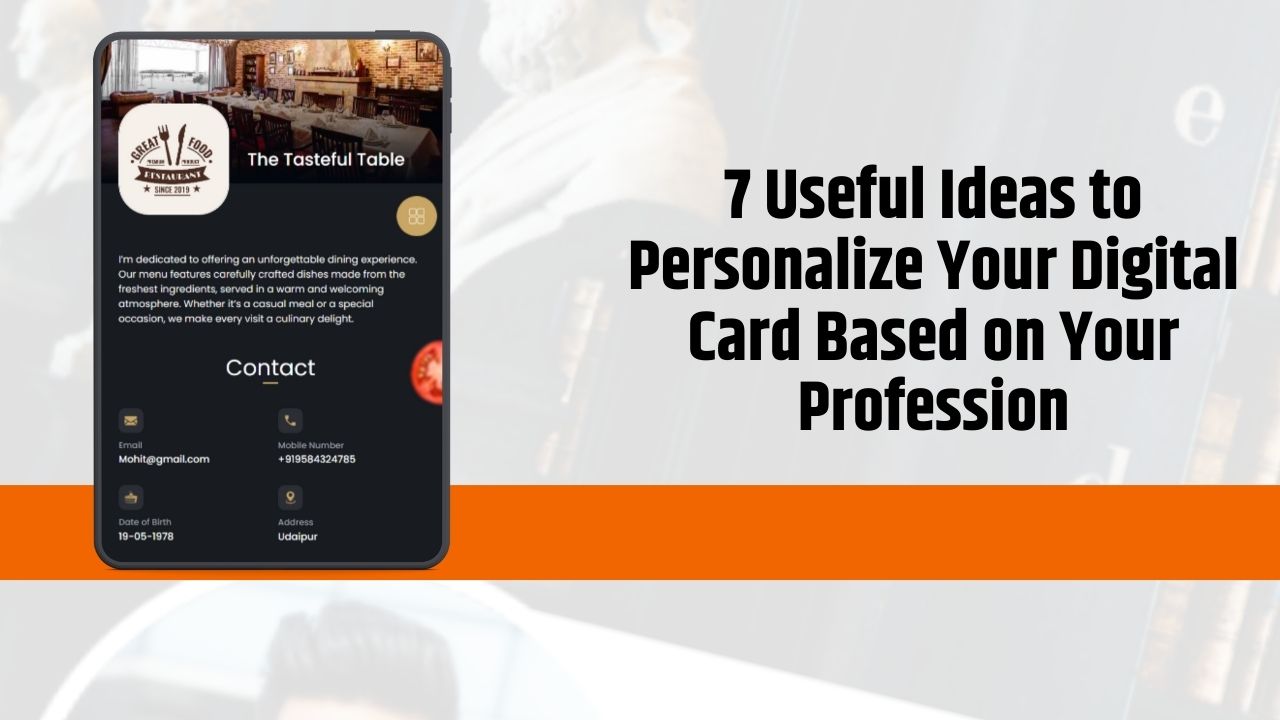
In today’s fast-paced digital world, almost every professional owns a Digital Card. It’s easy to share, convenient to update, and far more sustainable than traditional paper cards. But while digital cards have become common, making one truly memorable is still a challenge.
The difference lies in personalization. A Digital Card that reflects your profession, personality, and brand identity can instantly create a strong impression. Whether you’re a freelancer, entrepreneur, or corporate professional, customizing your card to fit your niche helps you stand out from the crowd.
Let’s explore seven smart and creative ways to personalize your Digital Card according to your profession.
Why Personalization Matters
Your business card—digital or physical—is often your first impression. In a world where attention spans are shrinking, the goal isn’t just to share your contact information—it’s to be remembered.
A generic card feels impersonal and forgettable. On the other hand, a personalized Digital Card shows effort and professionalism. It signals that you value presentation, design, and clarity—qualities that clients subconsciously associate with competence.
Personalization goes beyond aesthetics. The color palette, fonts, call-to-actions, and even the information layout all influence how people perceive you. For instance, a financial advisor using bold, clean typography builds trust differently than a designer using playful visuals and animations.
When done right, a personalized Digital Card can communicate your expertise before you even speak.
7 Smart Ways to Personalize Your Digital Card
1️⃣ Use Profession-Specific Templates
One design does not fit all. Choose a layout that suits your profession and work style.
A designer or artist may prefer a creative, image-forward template that showcases their portfolio. A lawyer, however, should use a more minimal, professional layout with structured spacing and clear fonts.
Templates aligned with your industry instantly convey who you are and what you represent—without saying a word.
2️⃣ Add a Clear Professional Tagline
Your tagline is your elevator pitch in one sentence. It quickly communicates your value and expertise.
Instead of writing just your job title, add a short descriptive line such as:
- “Helping startups scale with data-driven marketing.”
- “Creating modern brand identities that tell stories.”
A professional tagline not only strengthens your brand voice but also makes your profile more memorable to potential clients.
3️⃣ Showcase Relevant Links and Portfolios
Your Digital Card is more than contact details—it’s your mini portfolio. Include direct links to your work samples, website, or social media profiles relevant to your profession.
For example, a content creator can add YouTube or Instagram links to highlight projects, while a coach can include links to booking pages or testimonials. This turns your card into an interactive experience where leads can explore your work instantly.
4️⃣ Customize CTAs (Call-to-Actions)
Every profession has different goals. A smart digital card should guide people toward the next step.
Customize your CTAs according to what action you want users to take.
- Consultants: “Book a Consultation” or “Schedule a Call.”
- Product sellers: “Shop Now” or “View Catalog.”
- Freelancers: “See My Work” or “Request a Quote.”
The right call-to-action converts curiosity into engagement and helps nurture leads faster.
5️⃣ Choose Colors and Fonts That Reflect Your Industry
Design plays a huge role in communication. The visual tone of your card should mirror your profession’s nature.
- Corporate roles: Use neutral colors like navy, gray, or black with clean typography for authority and trust.
- Creative fields: Choose vibrant or pastel tones that reflect imagination and originality.
- Health and wellness: Opt for calm colors like green or blue to represent trust and care.
Your design choices are subtle cues that influence how others perceive your brand personality.
6️⃣ Add Client Testimonials or Ratings
People trust people. Including short testimonials or star ratings can make a big difference in credibility.
A brief quote from a happy client, such as “Delivered exceptional branding results in record time,” adds authenticity. For service-based professionals like consultants, designers, or freelancers, showcasing real feedback can be a powerful trust-builder.
This social proof makes your card not just a networking tool, but also a confidence signal.
7️⃣ Keep Information Dynamic and Updated
One of the biggest advantages of Digital Cards is their flexibility. Unlike paper cards, you can update them anytime.
Keep your profile fresh with new achievements, project links, or updated contact info. For example, a freelancer can add their latest work samples, while a restaurant owner might update seasonal menus.
A regularly updated card shows you’re active, evolving, and serious about your profession. It keeps leads engaged even months after the first interaction.
Real-Life Example: When Personalization Converts
Consider this scenario:
A marketing consultant attends a business meetup. Instead of handing out paper cards, they share their Digital Card through a QR code. The recipient opens it to find a clean layout, a short tagline—“Helping brands grow through data-driven strategies”—and a “Book a Free Call” button.
Later that evening, the prospect clicks the button, schedules a consultation, and eventually becomes a paying client.
That’s the power of personalization. It’s not just about design—it’s about guiding the viewer toward action through trust, convenience, and clarity.
How Personalization Builds a Stronger Professional Image
Personalized digital cards signal attention to detail—a trait clients love. They show that you care about how you present yourself and that you value professionalism.
This sense of authenticity helps you build deeper relationships. When your digital card reflects your true brand identity, it leaves a lasting impression that encourages clients to connect and collaborate.
Moreover, personalization gives you confidence during networking. Whether you’re meeting a potential partner or attending a conference, sharing a professional-looking digital card reinforces your credibility from the very first click.
Conclusion
A Digital Card isn’t just a modern replacement for paper—it’s a reflection of your brand identity.
When tailored thoughtfully, it becomes a silent ambassador for your professionalism and style. From templates and taglines to CTAs and testimonials, every element shapes how your audience perceives you.
Personalizing your Digital Card is not just about aesthetics—it’s about defining your brand in every interaction and creating connections that truly matter.
Follow us on Instagram: @digibusinesscardofficial


